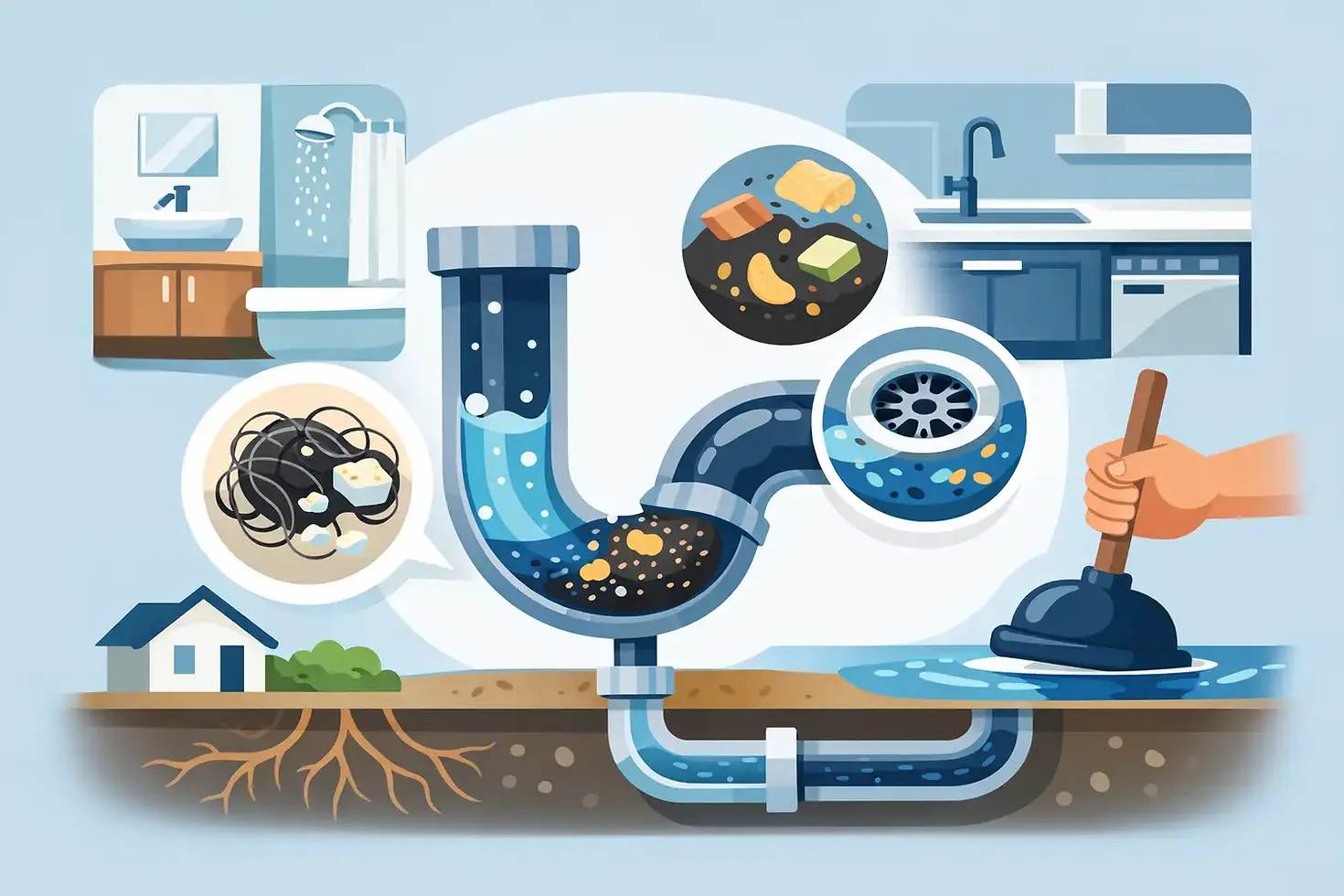
What Causes Recurring Drain Clogs in Your Home?

A sink that clogs again a week after being cleared is not just inconvenient. It is usually a sign that the blockage was pushed aside, not removed, or that a larger plumbing issue is developing farther down the line. Understanding what causes recurring drain clogs helps homeowners, property managers, and business owners address the source before slow drainage becomes an overflow, backup, or sewer repair.
What Causes Recurring Drain Clogs?
Recurring clogs typically happen for one of two reasons: material keeps entering the drain, or the drain line has a condition that allows waste to catch and build up. A plunger, store-bought drain cleaner, or basic hand auger may restore flow temporarily, but those methods do not always reach the full obstruction or reveal why it formed.
The location of the clog matters. A repeat issue in one bathroom sink calls for a different diagnosis than several fixtures draining slowly at once. The latter can point to a problem in the main sewer line, where prompt professional attention can prevent sewage from backing up into the property.
Grease, Soap, and Food Residue in Kitchen Drains
Kitchen sinks often develop recurring clogs from grease and food waste. Cooking oil may go down the drain as a liquid, but it cools on the inside of the pipe and becomes sticky. Over time, it traps food particles, coffee grounds, rice, pasta, and other debris until water has only a narrow path to move through.
Soap residue can make the problem worse, particularly in homes with hard water. The residue combines with grease and minerals to create a tough coating that ordinary rinsing will not remove. Garbage disposals help with small scraps, but they are not designed to process large amounts of fibrous vegetables, grease, bones, or expandable foods.
Hair and Product Buildup in Bathroom Drains
In shower, tub, and bathroom sink drains, hair is one of the most common causes of repeat clogs. Hair tangles around the stopper, drain crossbars, or rough areas inside the pipe. Then soap, shaving cream, toothpaste, and skin oils bind to it and form a dense blockage.
A surface hair catcher can reduce what enters the pipe, but it will not clear buildup already beyond the drain opening. If a bathroom drain improves briefly after cleaning and then slows down again, the remaining blockage may be deeper in the branch line.
Mineral Scale and Aging Pipe Interiors
Older properties throughout the San Francisco Bay Area may have aging galvanized steel, cast iron, or other legacy drain piping. As pipes age, corrosion and mineral scale can narrow their interior diameter. Instead of a smooth pipe wall, waste meets a rough surface where it can snag and accumulate.
This type of issue can feel like a routine clog at first. The difference is that the line continues to clog despite careful use and repeated drain cleaning. Depending on the pipe material and its condition, professional cleaning may provide relief, but severely deteriorated sections may need repair or replacement for a lasting result.
Tree Roots in the Sewer Line
Tree roots naturally seek moisture. Even a small crack, loose joint, or opening in an underground sewer line can attract roots, which grow inside the pipe and catch toilet paper and other waste. The line may drain normally for a time, then slow or back up as the root mass expands.
Root intrusion is especially important to consider when toilets gurgle, multiple drains slow down together, or a drain backup returns after it has been cleared. Cutting roots can restore flow, but it does not always repair the opening that allowed them in. A camera inspection can show whether cleaning, spot repair, or a larger sewer solution is appropriate.
Pipe Damage, Poor Slope, or Bellies in the Line
Drains rely on gravity. If a pipe has shifted, cracked, sagged, or been installed with poor slope, water and solids may not move through it properly. A low area in a buried pipe is often called a belly. Waste settles there, and clogs can recur even when the rest of the line is clear.
This is one reason recurring drain problems should not be treated as a simple cleaning issue forever. Mechanical cleaning can remove debris, but it cannot correct a broken pipe or an improper grade. Video inspection is often the clearest way to identify these hidden conditions without guessing.
Flushing Items Drains Cannot Handle
Toilets are designed for human waste and toilet paper. Products labeled as flushable may still catch in older plumbing, low-flow systems, or lines with roots and scale. Wipes, paper towels, feminine hygiene products, cotton swabs, dental floss, and diapers should always go in the trash.
Commercial restrooms, break rooms, and food-service areas face similar risks at a larger scale. Heavy use, grease production, and accidental disposal of unsuitable materials can create frequent blockages that interrupt operations. Regular maintenance is often more cost-effective than waiting for an emergency closure or overflow.
Clues the Problem Is Beyond One Fixture
A clogged sink is often isolated. But certain symptoms suggest a shared drain or main sewer problem that needs a qualified plumber. Watch for these signs:
Water backs up into a tub or shower when a toilet is flushed.
Multiple sinks, toilets, or floor drains are slow at the same time.
Drains make gurgling sounds or release persistent sewer odors.
A clog returns soon after plunging or using a drain snake.
Do not ignore these warning signs, especially if wastewater is appearing in a shower, floor drain, or lower-level fixture. Stop running water where possible and arrange service promptly. Continued use can force more water into a restricted line and increase the risk of property damage.
Why Chemical Drain Cleaners Are a Risky Repeated Fix
Chemical drain cleaners can appear to solve a small clog, but they have limits. They often travel through a partial opening without removing the full buildup. Strong chemicals can also create heat and corrosion concerns, particularly in older pipes or when different products have been mixed.
They are not a solution for roots, pipe damage, heavy grease, or a main sewer blockage. If the product remains in standing water, it can also create a safety hazard for anyone attempting to service the drain afterward. A professional drain cleaning approach uses the right equipment for the line and blockage, rather than relying on repeated chemical treatments.
How Professionals Find the Real Cause
Effective drain service begins with the symptoms: which fixtures are affected, how often the clog returns, whether there are odors or gurgling sounds, and whether the problem changes after rain or heavy use. From there, a technician may use a cable machine to remove localized obstructions or hydro jetting to clear grease, sludge, and buildup from suitable pipe systems.
For persistent or widespread issues, a sewer camera inspection can be the most valuable next step. It allows the technician to see roots, cracks, standing water, corrosion, offsets, and other conditions inside the line. That information helps prevent unnecessary repairs and supports a clear recommendation based on the actual condition of the plumbing.
The right method depends on the pipe material, age, blockage type, and whether the property is residential or commercial. High-pressure cleaning can be very effective, for example, but it should be used carefully when pipes are fragile or damaged. A professional assessment protects both the drain line and the property.
Preventing Repeat Drain Problems
Good habits reduce buildup, although they cannot correct damaged or root-invaded pipes. Keep grease, coffee grounds, and food scraps out of kitchen drains. Use drain screens in showers and bathroom sinks, and remove collected hair regularly. Dispose of wipes and hygiene products in the trash, even if packaging says they are flushable.
For restaurants, multi-unit properties, and facilities with frequent drain use, scheduled drain maintenance can prevent disruptions before they occur. Homes with mature trees or known sewer-line concerns may also benefit from periodic inspection and cleaning. Superb Rooter & Plumbing can help Bay Area property owners identify the cause of repeated clogs and choose a practical repair or maintenance plan.
A drain that keeps clogging is giving you useful information: something in the system needs more than a quick reset. Addressing it early can keep a minor slowdown from becoming a messy, expensive interruption.


Comments