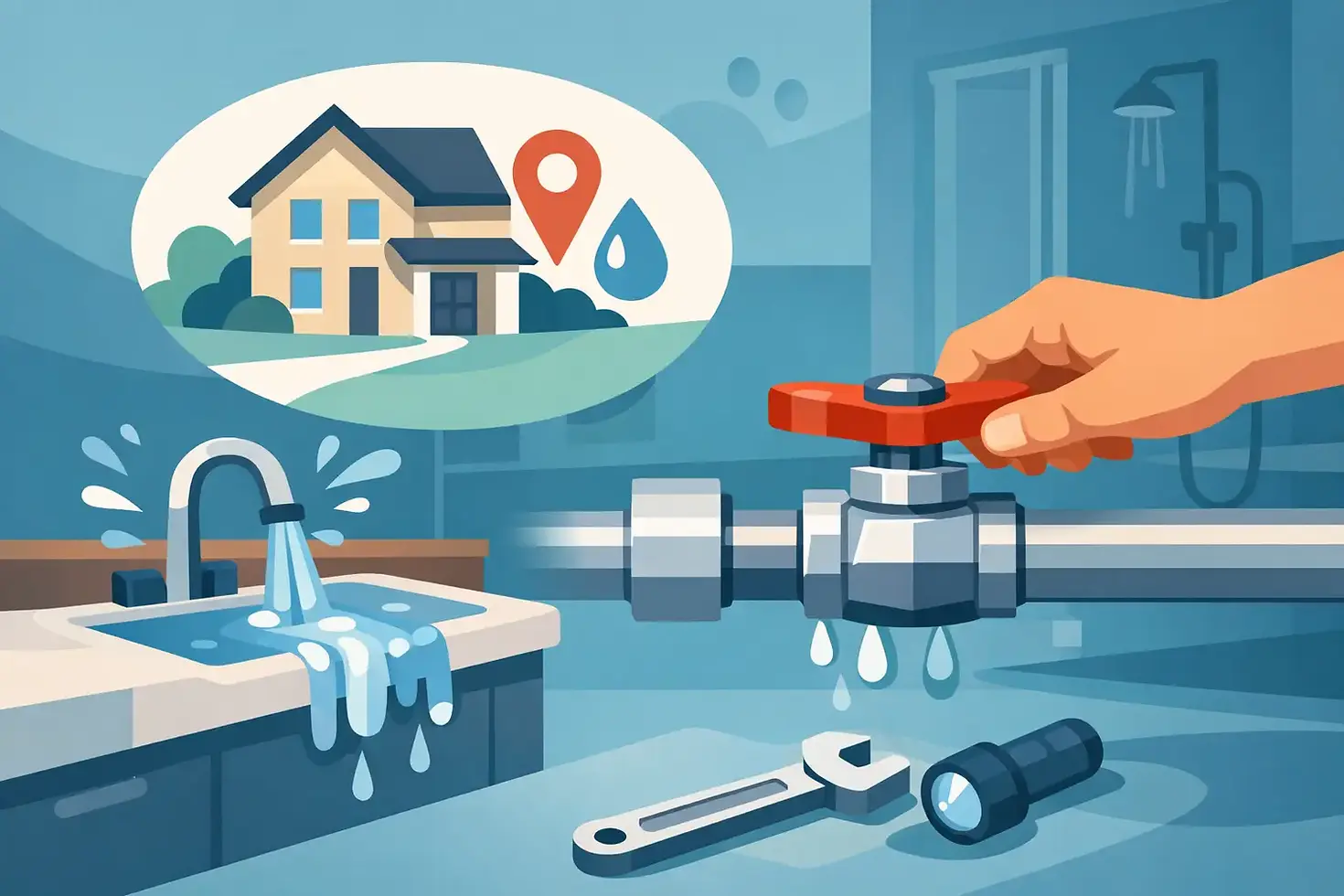
How to Shut Off Water Fast at Home

A burst supply line does not wait for a convenient time. Whether it happens under a kitchen sink, behind a toilet, or in a commercial restroom, knowing how to shut off water fast can limit damage, protect flooring and walls, and buy you time to get the right repair in place.
The key is not just moving quickly. It is knowing which valve to reach for first, where it is usually located, and when a local shutoff is enough versus when you need to stop water to the entire building. In the Bay Area, where many properties include older plumbing, remodel additions, and mixed-use spaces, that distinction matters.
How to shut off water fast without guessing
When water is actively leaking, start with the shutoff closest to the problem. If the leak is coming from a sink faucet supply line, toilet fill valve, dishwasher line, or washing machine hose, there is often a dedicated stop valve nearby. Turning off that fixture-level valve is usually the fastest way to stop the flow while keeping water available to the rest of the property.
If you do not see a local valve, or if the valve is stuck, corroded, or not fully stopping the leak, go straight to the main water shutoff. Do not spend extra minutes troubleshooting while water is spreading. In a true emergency, the fastest successful shutoff is the right one.
Most shutoff valves close by turning clockwise. Some quarter-turn ball valves shut off with a simple 90-degree turn until the handle is perpendicular to the pipe. Older gate valves may require several full turns. If resistance is extreme, avoid forcing it too hard. A brittle or damaged valve can break and create a bigger problem.
Start with fixture shutoff valves
For common household and commercial plumbing fixtures, individual shutoffs are often the first line of defense. Under sinks, you will usually find one valve for hot water and one for cold. Behind toilets, there is typically one small shutoff on the wall or floor side. Washing machines usually have hot and cold valves in a recessed box or exposed hookup area.
Water heaters also have dedicated supply controls, though shutting off a water heater involves more than one step if there is a leak at the tank itself. If the unit is leaking from the bottom, turning off the cold-water supply can help, but you may also need to shut off gas or power depending on the system. That is where speed matters, but so does caution.
Refrigerator ice maker lines, dishwashers, and commercial breakroom sinks can be harder to trace because valves may be hidden in cabinets, utility rooms, or access panels. If you manage a multi-unit property or business, it is worth identifying these in advance rather than during an emergency.
Where the main water shutoff is usually located
If a local valve does not solve the issue, the main shutoff is your next move. In most homes, the main water valve is located where the service line enters the building. That may be in a garage, crawl space, basement, utility closet, or on an exterior wall near the front of the property.
In some Bay Area homes, especially older ones, there may also be a municipal shutoff at the meter near the curb or sidewalk. That valve is not always the best first choice because it can require a meter key or wrench, and access may be limited. The building-side main shutoff is usually faster if you know where it is.
Commercial properties can be more complicated. A business may have one main shutoff for the whole building, separate shutoffs for individual suites, or dedicated controls for restrooms, kitchens, irrigation, and mechanical systems. Property managers should know which valves affect tenant spaces versus common areas. In a restaurant, office, or retail setting, shutting off the wrong line can create unnecessary downtime.
How to shut off water fast in different emergencies
Not every leak calls for the same response. A dripping faucet can wait. A broken supply hose cannot. The right move depends on volume, location, and whether the leak is under pressure.
If a toilet is overflowing and will not stop filling, shut off the valve behind the toilet first. Then remove the tank lid and lift the float if needed. If the shutoff fails, use the main valve.
If a sink supply line bursts, close both under-sink valves. If the leak continues because the line split before the valve or the shutoff is defective, turn off the main immediately.
If a washing machine hose ruptures, turn off the hot and cold washer valves. These leaks can release a surprising amount of water in a short time, especially on upper floors where water can travel into walls and ceilings below.
If a pipe in a wall or ceiling breaks, go straight to the main shutoff. There is usually no practical reason to search for a smaller valve when structural damage is on the line.
If the water heater is leaking heavily, shut off the cold-water supply to the heater. If the leak is significant or the source is unclear, shut off the main and then safely isolate power or gas if you know how. If not, call a plumber right away.
What to do right after the water is off
Stopping the water is the first step, not the last. Once the flow is under control, open a nearby faucet to relieve pressure in the lines. This helps reduce residual water and makes some repairs safer. If the leak involved hot water, use caution because the remaining water in the line may still be very hot.
Then focus on protecting the property. Move rugs, boxes, electronics, or inventory away from wet areas. Use towels, mops, or a wet vacuum if available. In commercial spaces, block off slippery areas to reduce the risk of a fall.
Take a quick look at the source. You do not need to diagnose the entire plumbing system, but knowing whether the problem is a failed shutoff valve, cracked pipe, broken hose, or leaking fixture connection helps you explain the issue clearly when you call for service.
When a shutoff valve will not cooperate
One of the most frustrating situations is a valve that will not turn, only partially closes, or starts leaking around the stem once you touch it. This is common in older plumbing systems that have not been exercised in years.
If the fixture valve will not move, do not keep wrenching on it until it snaps. Go to the main shutoff instead. If the main valve is also seized or unreliable, that is no longer a minor plumbing issue. It is a property risk.
This is one reason routine plumbing maintenance matters. A shutoff valve you cannot trust during an emergency is a hidden liability. Replacing old fixture stops and making sure the main shutoff operates correctly can prevent a much larger loss later.
A few smart steps before an emergency happens
The best time to learn your shutoff locations is when everything is dry. Walk the property and identify the main valve, fixture valves, water heater shutoff, and any irrigation or backflow-related controls that could affect water flow. If you manage a business or multi-unit building, label them clearly.
It also helps to keep basic access open. Do not block shutoff points with storage, shelving, or heavy equipment. In garages and utility closets, even a few extra seconds spent moving items can mean more water on the floor.
For homes and commercial facilities alike, hose failures, aging angle stops, and corroded connectors are some of the most common causes of sudden water damage. Replacing worn components before they fail is often far less expensive than drying out walls, replacing flooring, or pausing operations for cleanup.
If you are not sure your valves work, have them inspected. A professional plumber can confirm shutoff locations, test valve operation, and address weak points before they turn into after-hours emergencies.
When water is moving where it should not, fast action protects more than pipes. It protects your home, your business, and your peace of mind. And if the shutoff is not enough or the repair is not something you should handle alone, getting prompt professional help is the next smart move.


Comments