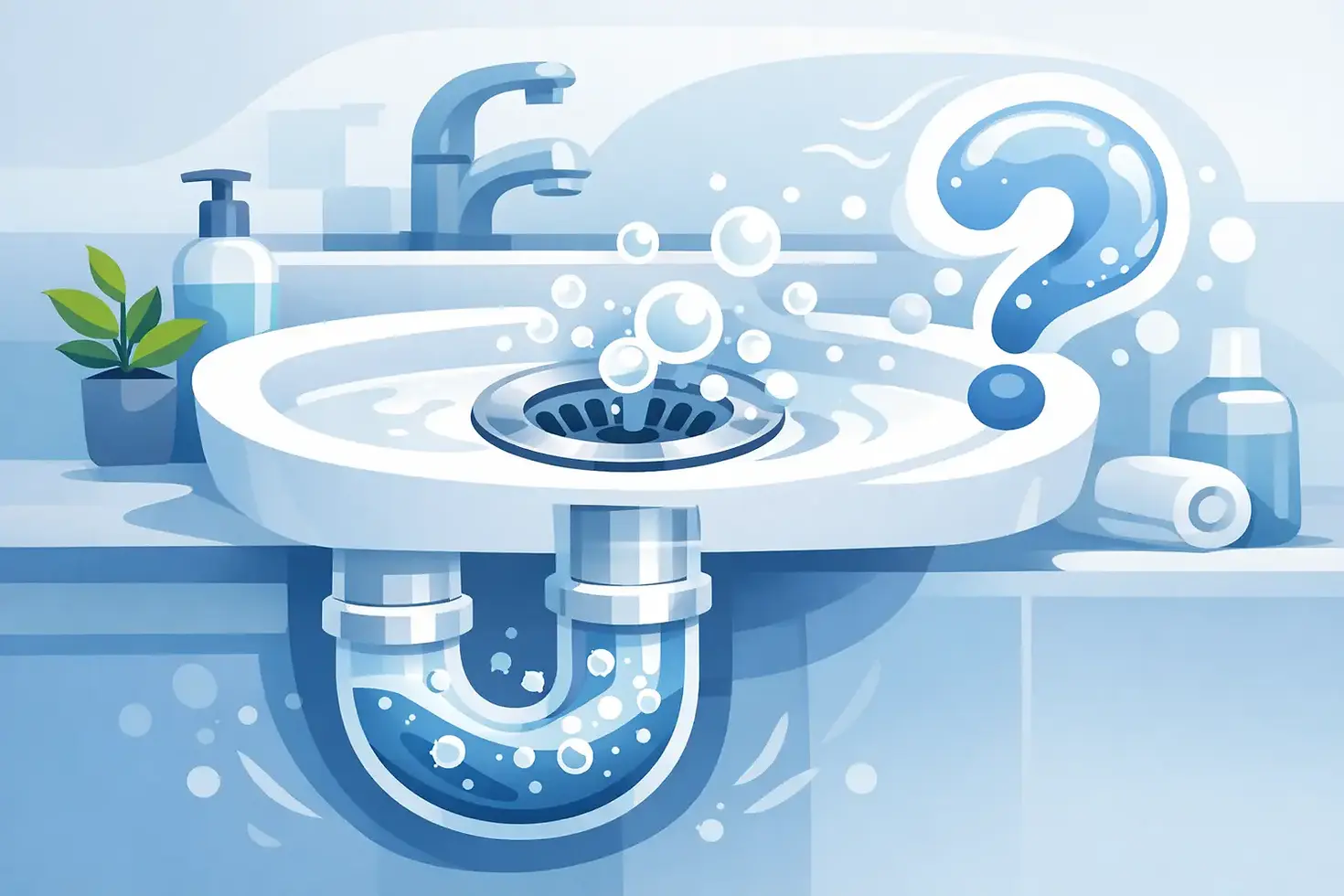
Why Is My Drain Gurgling?

A drain that starts gurgling after you run the sink or flush a toilet usually is not just being noisy. If you are asking, why is my drain gurgling, the short answer is that air is getting trapped somewhere it should not be. That often points to a developing clog, a venting problem, or a sewer line issue that needs attention before it gets worse.
Gurgling happens when water moves through your plumbing system but airflow cannot balance the pressure the way it is supposed to. Instead of draining quietly, the pipe pulls or pushes air through standing water in a sink, tub, shower, or toilet. That bubbling sound is your plumbing system telling you something is off.
Why is my drain gurgling in the first place?
In a properly working drain system, wastewater flows out and sewer gases vent safely through the plumbing vent stack. When a clog starts narrowing the pipe, or when a vent is blocked, the system struggles to move water and air at the same time. The result is that familiar gurgling or bubbling noise.
Sometimes the problem is minor. A bathroom sink may gurgle because of hair and soap buildup near the trap or branch drain. In other cases, the sound is an early warning of a more serious restriction deeper in the line, especially if multiple fixtures are involved.
The most common causes include partial drain clogs, blocked plumbing vents, sewer line obstructions, and in some homes, improper pipe slope or older plumbing layouts. The sound alone does not confirm which one you are dealing with, but the pattern usually offers strong clues.
The most common causes of a gurgling drain
A partial clog is slowing the line
This is the most frequent cause. Grease, soap residue, food waste, hair, paper products, and mineral buildup can narrow a pipe enough to disturb normal flow. Water still drains, but not smoothly. As it squeezes past the blockage, it creates pressure changes that pull air through the nearest trap.
A kitchen sink often gurgles from grease and food debris. Bathroom drains usually point to hair, soap scum, and personal care products. Floor drains in utility areas can gurgle when sediment builds up over time.
The key detail is that a partial clog often gets worse gradually. Today it is noise. Next week it may be slow drainage. After that, it can turn into a full backup.
A plumbing vent is blocked
Your drain system depends on vent pipes to let air move freely. If a vent stack is blocked by debris, leaves, nesting material, or even heavy buildup, the system cannot equalize pressure properly. That can make a drain gurgle even when the drain itself is not fully clogged.
Vent issues can be harder to spot because the symptom may show up inside while the actual blockage is on the roof or farther up the vent line. If drains across the property make noise, especially after flushing a toilet or running a larger volume of water, venting is worth checking.
The main sewer line may be restricted
This is the cause homeowners and property managers should take seriously. If more than one fixture is gurgling, or if a toilet bubbles when a sink, tub, washing machine, or dishwasher drains, the issue may be in the main sewer line.
In the Bay Area, older sewer lines and root intrusion are common concerns. Tree roots can enter small cracks or joints and slowly obstruct the pipe. Grease, wipes, and foreign objects can also contribute to a main line restriction. Once the main line starts backing up, wastewater has nowhere to go and can return through the lowest drains in the building.
Toilet-related pressure changes
Sometimes the sound seems to come from a sink or shower, but the toilet is part of the story. Toilets move a large volume of water quickly, so they can expose a hidden clog or vent issue fast. If flushing causes nearby drains to gurgle, that usually means the branch line or shared waste line is struggling.
This is especially common in bathrooms where multiple fixtures connect to the same drain line.
When a gurgling drain is a warning sign
One noisy sink does not always mean you have a plumbing emergency. But there are signs that the issue is moving beyond a simple nuisance.
If the drain is also slow, smells bad, backs up occasionally, or affects more than one fixture, the problem is likely deeper than a surface clog. If a toilet bubbles without being used, or if water rises in a tub when another fixture drains, that points to pressure problems in the system that should be diagnosed quickly.
For homes and commercial properties, timing matters. A partial blockage is usually more manageable and less expensive to address than a major backup that damages flooring, walls, or operations.
What you can try before calling a plumber
For a single slow sink or tub, there are a few practical first steps. Remove visible debris from the stopper or drain opening. If it is a bathroom sink, clean out hair and soap buildup around the pop-up assembly. If it is a kitchen sink, avoid adding more grease or food waste until the issue is resolved.
A plunger can sometimes help with a local clog, especially in sinks, tubs, or toilets with mild obstruction. A basic drain snake may also clear hair or debris close to the opening.
Use caution with chemical drain cleaners. They do not always reach the real blockage, they can damage older pipes, and they create a harsher environment for any technician who has to work on the line later. If the drain keeps gurgling after simple cleanup or plunging, it is usually time for a professional inspection.
When to call for professional drain service
If the gurgling involves multiple fixtures, keeps coming back, or is paired with sewage odors or backups, professional service is the safest next step. The goal is not just to quiet the sound. It is to find the actual restriction, confirm whether venting is involved, and fix the problem before it escalates.
A plumber may start with drain cleaning or snaking for a branch line issue. If the symptoms suggest a deeper problem, camera inspection can help identify root intrusion, heavy buildup, pipe damage, or a belly in the line. For stubborn sewer obstructions, hydro jetting may be the right option, though it depends on pipe condition and the type of blockage.
This is where experience matters. Not every gurgling drain needs the same solution, and guessing can waste time while the underlying problem gets worse.
Why gurgling drains matter for homes and businesses
At home, a gurgling drain can disrupt normal routines and signal a backup risk in kitchens, bathrooms, laundry rooms, or lower-level drains. In a commercial setting, the stakes can be even higher. Restaurants, offices, retail spaces, and multi-unit properties depend on reliable plumbing to stay clean, safe, and operational.
Ignoring the sound can lead to service interruptions, property damage, sanitation concerns, and frustrated occupants. What starts as a small airflow problem can become a much larger repair if wastewater begins backing up into occupied spaces.
How to reduce the chances of it happening again
Good drain habits make a real difference. Keep grease, coffee grounds, wipes, hygiene products, and food scraps out of drains. Use strainers in showers and sinks where hair or debris is common. If your property has mature trees near the sewer line, periodic inspections can help catch root problems early.
For older properties, recurring gurgling may point to a bigger maintenance issue rather than a one-time clog. In those cases, routine drain cleaning can be a smart preventive step. A dependable plumbing team can also help determine whether there are venting or line condition concerns that should be addressed proactively.
If you are hearing that bubbling sound and wondering whether to wait, trust the pattern. Plumbing systems rarely get louder for no reason. A quick response now can prevent a stressful cleanup later, and that peace of mind is worth acting on.


Comments