Why Is Your Toilet Bubbling and What Should You Do?

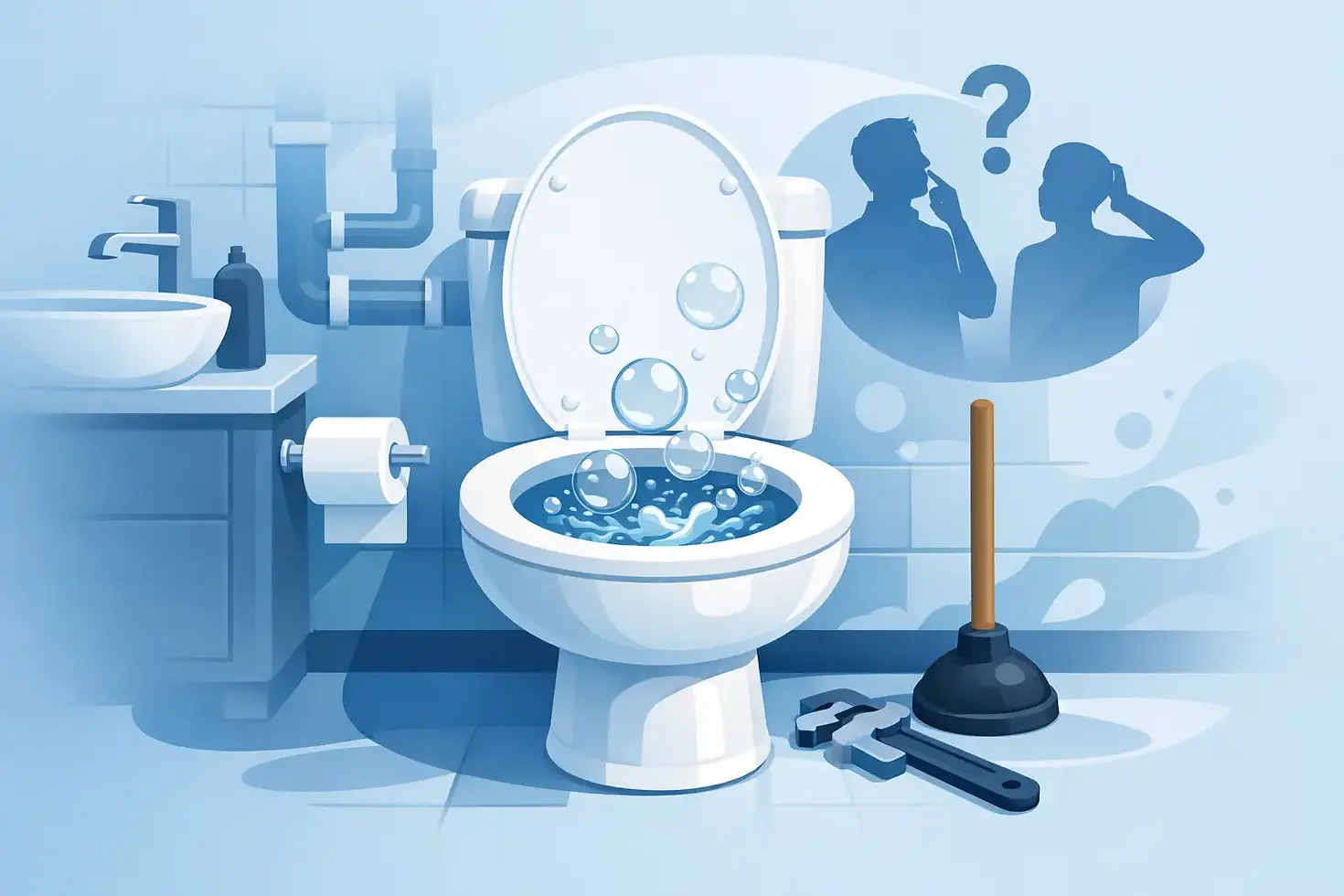
A toilet that bubbles, gurgles, or releases air after flushing is not just making an odd sound. Toilet bubbling often means air is being forced back through the plumbing because wastewater is not moving freely where it should. Sometimes the fix is a simple nearby clog. In other cases, the sound is an early warning of a developing sewer line problem that deserves prompt professional attention.
For homeowners, property managers, and business owners, acting early can help prevent an inconvenient backup, water damage, and an out-of-service restroom. The key is knowing what the bubbling is telling you and what not to do while you wait for the issue to be diagnosed.
What Toilet Bubbling Usually Means
A plumbing drainage system relies on gravity, properly sized pipes, and a vent system that balances air pressure. When you flush, wastewater travels down the drain while air moves through the vent stack, usually through the roof. That airflow keeps the water in traps where it belongs and helps waste move smoothly through the line.
When a clog, obstruction, or vent issue disrupts that balance, air may seek the easiest available escape route. The toilet bowl is one of those routes. You may hear a gurgle, see bubbles rising from the bowl, or notice the water level moving up and down.
The timing matters. Bubbling immediately after your own flush can point to a restriction in the toilet drain or branch line. Bubbling when a shower drains, a washing machine runs, or another toilet flushes can suggest a blockage farther down the shared drain or sewer line. In a commercial property, a problem affecting several restrooms should be treated as a priority because it can quickly interrupt operations.
Common Causes of Toilet Bubbling
A clog in the toilet or nearby drain line
A partial clog is one of the most common explanations. Toilet paper buildup, wipes, hygiene products, small objects, or excess paper products can narrow the passage enough to slow the flow of water. As water pushes past the restriction, it can create pressure changes that cause gurgling and bubbles.
A plunger may help if the clog is close to the toilet and the bowl has not overflowed. Use a flange-style toilet plunger, maintain a good seal, and work steadily rather than splashing aggressively. If several attempts do not improve flushing, stop before repeated flushing creates an overflow.
A blockage in the main sewer line
When more than one fixture is draining slowly or making noise, the concern shifts from the toilet itself to the main sewer line. This line carries wastewater from the building to the municipal sewer connection or, where applicable, a septic system.
Common main-line obstructions include accumulated grease, paper buildup, tree root intrusion, a damaged or shifted pipe, and debris entering an older line. Bay Area properties with mature landscaping or aging sewer infrastructure can be especially vulnerable to root-related problems and deteriorated pipe sections.
A main sewer clog can progress from occasional bubbling to wastewater backing up through the lowest drain in the building. That may be a shower, tub, floor drain, or ground-level toilet. This is not a wait-and-see situation.
A blocked plumbing vent
The vent stack does not carry wastewater, but it is essential to proper drainage. Leaves, nests, debris, and occasionally other obstructions can restrict airflow at the roof vent opening. With inadequate venting, fixtures can drain slowly, gurgle, or pull water from traps.
Vent diagnosis is more technical than it may sound. Roof access has safety risks, and the symptoms can look very similar to a drain blockage. A qualified plumber can determine whether the issue is truly vent-related or whether a hidden drain restriction is creating the pressure problem.
A problem with the municipal sewer connection
If the toilet bubbles during heavy rain, or if neighbors report similar sewer concerns, the issue may involve the public sewer system or the connection between the property line and the municipal line. Responsibility can vary based on the exact location of the blockage and local requirements.
A professional inspection can identify where the trouble is occurring and provide useful documentation if a municipal agency or property owner needs to coordinate repairs. Do not assume the city is responsible simply because the problem appears outside the building. Private lateral sewer lines are often the property owner’s responsibility.
When Toilet Bubbling Is an Emergency
Not every gurgle requires an emergency visit, but a few symptoms call for fast action. Stop using water-heavy fixtures and arrange immediate plumbing service if you notice any of the following:
Sewage, dirty water, or wastewater backing up into a tub, shower, sink, or floor drain
Bubbling or slow drainage at multiple fixtures throughout the property
A toilet bowl water level that rises close to the rim after flushing
Strong sewer odors indoors or around drains
Repeated overflows, especially in a business, multi-unit building, or occupied rental property
A sewer backup can expose people to contaminated water and damage flooring, walls, inventory, and personal belongings. For commercial facilities, it can also create sanitation concerns and force restroom closures. Keep people away from affected water, avoid running dishwashers or laundry equipment, and do not keep flushing to test whether the line has cleared.
What You Can Safely Do Before a Plumber Arrives
Start by limiting water use. If the toilet bubbles when the washing machine drains or the shower runs, avoid both until the source of the problem is clear. Every gallon sent into a blocked drain line increases the chance of a backup somewhere else.
If only one toilet is affected and it is not close to overflowing, a careful attempt with a flange plunger is reasonable. Do not use chemical drain cleaners in a toilet. These products often fail to clear the actual obstruction, can damage plumbing components, and create a safety hazard for anyone who later needs to service the drain.
A toilet auger can clear some objects or clogs beyond the reach of a plunger, but it should be used carefully to avoid scratching the porcelain or pushing an object deeper into the drain. If the toilet is bubbling along with other fixtures, skip the do-it-yourself approach. That pattern usually requires professional drain cleaning equipment and, in some cases, a sewer camera inspection.
How a Professional Diagnoses the Cause
A dependable diagnosis starts with the pattern of symptoms. A plumber may ask which fixtures are affected, whether the issue began suddenly or gradually, whether recent construction or landscaping work occurred, and whether the problem changes during rain.
For a localized blockage, the plumber may use a professional auger or drain-cleaning machine to clear the line. For suspected main sewer problems, high-powered cable equipment or hydro jetting may be appropriate. The right method depends on the pipe material, the nature of the blockage, and the condition of the line. Hydro jetting can be highly effective for grease, sludge, and roots, but it should not be used blindly on a severely damaged pipe.
A sewer camera inspection can reveal roots, cracks, bellies in the line, offsets, corrosion, or recurring buildup. This step is valuable because it replaces guesswork with a clear view of the inside of the pipe. If a repair is needed, the findings help determine whether spot repair, trenchless work, or replacement is the practical option.
Preventing Future Toilet Bubbling
The best prevention is to treat toilets as toilets, not trash cans. Only human waste and toilet paper should be flushed. Even products labeled flushable can contribute to blockages, particularly in older plumbing or long drain runs.
For homes with recurring sewer issues, regular inspection and preventive drain maintenance can catch root growth and buildup before they turn into a backup. Property managers and business owners may benefit from scheduled service, especially in facilities with frequent restroom use, shared drain systems, or older sewer laterals.
If your toilet is bubbling, trust the symptom. A quiet drain system should move water without pushing air and wastewater back toward your fixtures. Prompt diagnosis from Superb Rooter & Plumbing can help protect your property, restore normal drainage, and prevent a small warning sign from becoming a much larger cleanup.


Comments