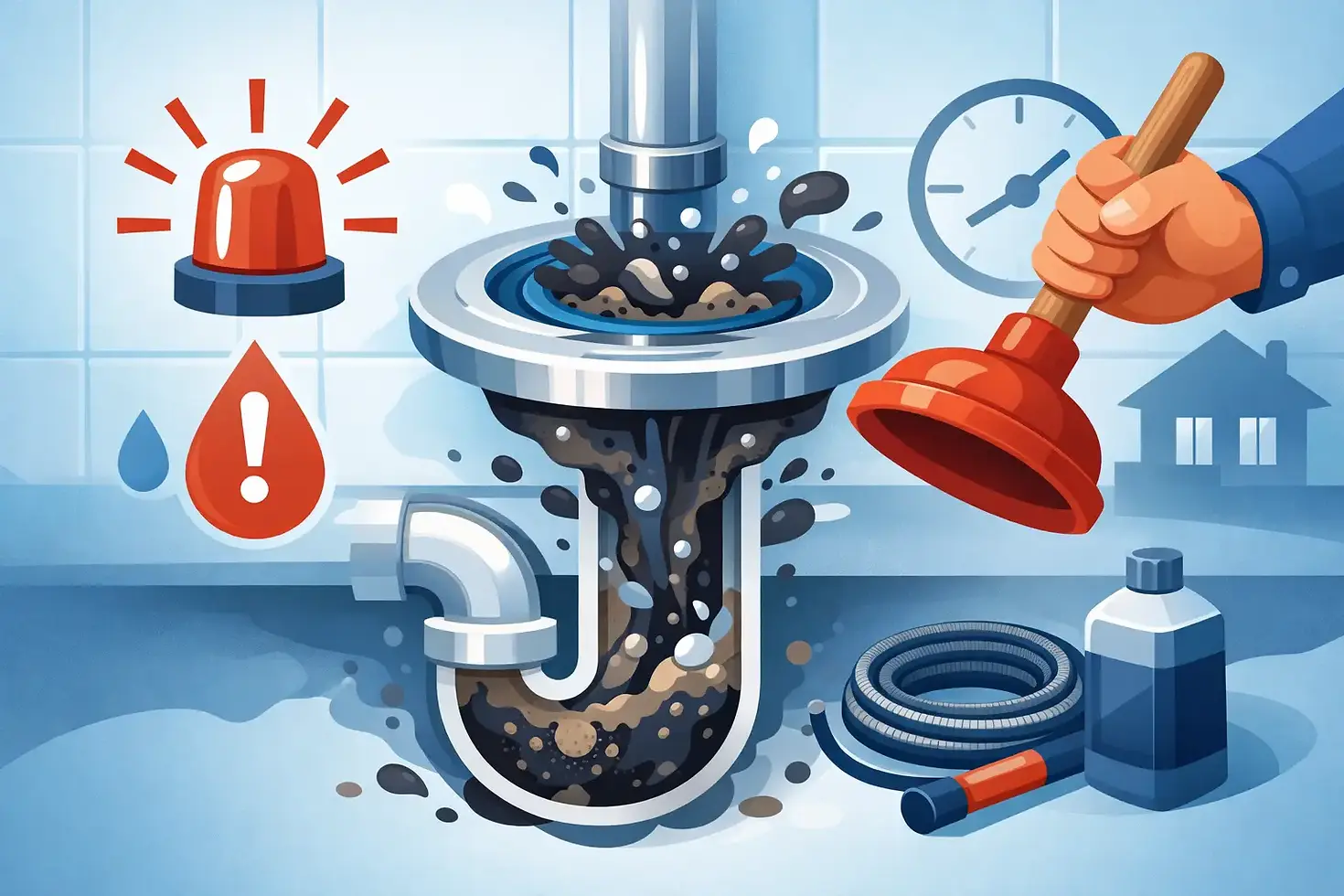
Drain Cleaning: When to Act Fast

A slow kitchen sink during breakfast rush or a shower that starts pooling around your feet is more than a small annoyance. In many cases, it is an early warning sign that drain cleaning should happen before a simple clog turns into a backup, leak, or service interruption.
For homeowners, property managers, and business owners, drains usually get attention only when they stop working. That is understandable. Most plumbing systems stay out of sight and out of mind until something goes wrong. The problem is that waiting too long can lead to bigger repairs, water damage, foul odors, and disruption you did not plan for.
Why drain cleaning matters more than people think
Drains handle constant daily use. In a home, that means soap, grease, food scraps, hair, and residue moving through pipes every day. In a commercial setting, the volume is often higher and the stakes are greater. Restaurants, retail spaces, apartment buildings, and offices all depend on plumbing that works without interruption.
When buildup starts inside a drain line, water can still pass through for a while. That is why many clogs develop slowly. At first, you may notice minor symptoms such as gurgling sounds or water draining more slowly than usual. Over time, the opening narrows further, pressure changes inside the line, and wastewater may begin to back up into sinks, tubs, or floor drains.
Professional drain cleaning is not just about restoring flow in the moment. It is also about removing the material causing the problem and checking whether there is a deeper issue, such as root intrusion, pipe damage, scale buildup, or a sewer line obstruction.
Common signs you should not ignore
Some plumbing issues can wait for a scheduled appointment. Others should be addressed quickly. The difference often comes down to how many fixtures are affected and whether wastewater is backing up into the property.
A single slow sink may point to a localized clog near that fixture. If multiple drains are slow at the same time, especially on the lowest level of a building, the issue may be farther down the line. That can mean a main drain or sewer problem, which carries more urgency.
Watch for recurring clogs, water backing up in one fixture when another is used, unpleasant drain odors, bubbling or gurgling noises, and standing water that takes too long to clear. In commercial properties, even a partial blockage can become a business problem fast. Restrooms, kitchen areas, and utility spaces need reliable drainage to stay safe and operational.
If sewage is coming back into the building, that is not a wait-and-see situation. It needs immediate professional attention.
What usually causes clogged drains
Most drain problems come down to accumulation. In kitchen lines, grease is one of the biggest culprits. It may go down warm as a liquid, but it cools, thickens, and sticks to pipe walls. Over time, food particles and debris attach to it, reducing flow.
In bathrooms, hair, soap residue, toothpaste, and hygiene products are frequent causes of blockage. In laundry areas, lint and detergent buildup can contribute. For older properties, corrosion and mineral scale inside the piping may make buildup happen faster.
Then there are the deeper line issues. Tree roots can enter underground pipes through small cracks or joints, especially in aging sewer systems. Once inside, they trap debris and keep growing. Shifting soil, pipe bellies, broken sections, and improper slope can also interfere with drainage. In these cases, clearing the line is part of the solution, but identifying the condition of the pipe matters just as much.
DIY drain cleaning has limits
It is tempting to try a store-bought cleaner or a quick tool from the hardware aisle. Sometimes a simple plunger works for a minor clog near the surface. That can be a reasonable first step for a single fixture if there is no backup elsewhere.
But chemical drain cleaners are a different story. They often fail to remove the full blockage, and repeated use can be hard on pipes, especially older plumbing. They also create safety issues for anyone who later has to open the drain or service the line.
Hand augers and basic tools can help with shallow clogs, but they usually do not address the full condition of the pipe. If the clog keeps returning, that is a sign the underlying problem has not been resolved. What looks like a quick fix can end up costing more if it delays proper service.
Professional drain cleaning methods
The right method depends on the type of clog, the location, and the condition of the line. That is why a professional assessment matters.
Drain snaking is often effective for breaking through localized obstructions such as hair clogs or compacted debris. It can restore flow quickly, but it may not fully clean heavy buildup from the pipe walls.
Hydro jetting is a stronger solution for tougher conditions. This method uses high-pressure water to clear grease, sludge, scale, and debris from the inside of pipes. It is especially useful for recurring drain issues and commercial systems where buildup tends to be more severe. That said, hydro jetting is not right for every pipe. If a line is already damaged or fragile, the system should be evaluated first.
Camera inspection is another valuable tool, especially for main line problems. It allows a technician to see what is happening inside the pipe and confirm whether the issue is buildup, roots, a collapsed section, or something else. That saves time and helps avoid guesswork.
At Superb Rooter & Plumbing, the goal is not just to punch a hole through a clog and leave. It is to restore proper flow, identify the cause, and recommend the right next step based on what the plumbing system actually needs.
Drain cleaning for homes vs. commercial properties
Residential and commercial drain issues may look similar on the surface, but they are not always handled the same way.
In homes, the priority is often speed, cleanliness, and preventing damage to kitchens, bathrooms, laundry rooms, and lower-level drains. Many homeowners want the immediate problem fixed while also understanding how to avoid a repeat issue. A straightforward explanation and dependable workmanship matter just as much as the repair itself.
For commercial properties, the concerns are broader. Property managers and business owners may be dealing with multiple units, tenant complaints, health standards, and operational downtime. A blocked line in a restaurant kitchen or a restroom backup in a retail space affects more than convenience. It can interrupt business, create safety concerns, and lead to compliance issues.
That is why responsive service and accurate diagnosis are so important. The right plumbing partner understands both the urgency and the need for lasting results.
How to reduce future drain problems
No drain system is completely maintenance-free, but a few good habits can reduce the chances of major clogs.
Avoid pouring grease, oil, or food scraps down kitchen drains. Use drain strainers where appropriate, especially in showers and sinks that collect hair or debris. Flush only what the plumbing system is designed to handle. In multi-unit or commercial settings, routine maintenance can make a major difference because it addresses buildup before it turns into an emergency.
Still, prevention has limits. Older piping, root intrusion, and hidden damage will not be solved by better habits alone. If you are seeing repeat issues in the same area, it is usually time for a professional inspection rather than another temporary fix.
When to call for service
If a drain is slow once, you may be able to monitor it. If it is slow again next week, backing up into another fixture, producing odors, or affecting several drains at once, it is time to schedule service. The sooner the issue is identified, the better the chance of avoiding water damage, sanitation problems, and larger pipe repairs.
This is especially true in the Bay Area, where a mix of older infrastructure, mature trees, and busy residential and commercial properties can create conditions for stubborn drain and sewer line issues. Fast response matters, but so does doing the job correctly.
A working drain system should not demand your attention every few weeks. When clogs return or symptoms spread, the plumbing is telling you something. Getting ahead of it with professional drain cleaning can protect your property, restore normal use, and give you one less urgent problem to worry about.
When water is not moving the way it should, trust what you are seeing and act early. A prompt call today is often what prevents a much bigger plumbing problem tomorrow.


Comments