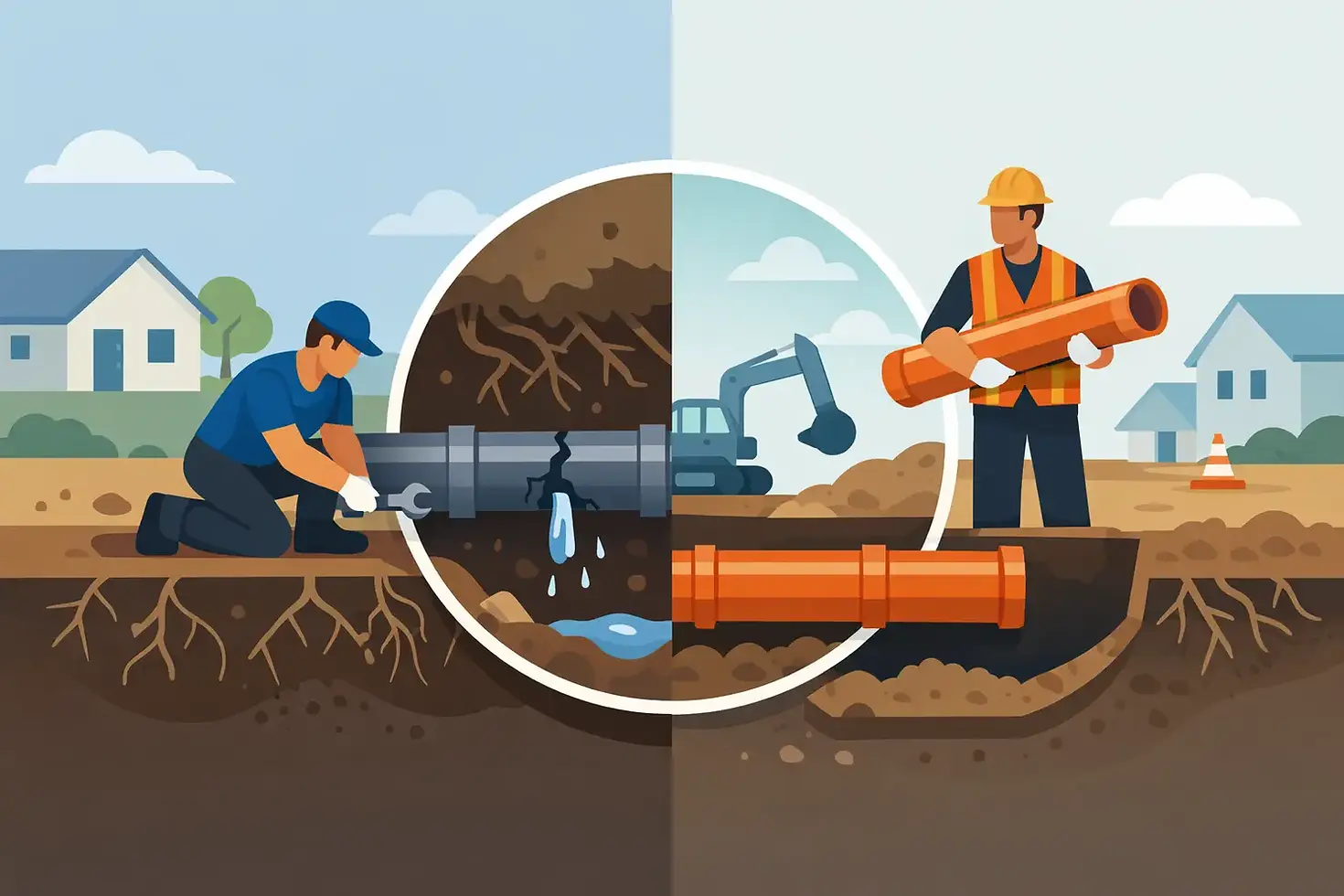
Repair vs Replace Sewer Line: What Wins?

A sewer problem rarely starts with a dramatic collapse. More often, it shows up as a slow drain that keeps coming back, a bad smell outside, or a backup that turns one plumbing issue into a property problem. When customers ask about repair vs replace sewer line decisions, they usually want one thing - a clear answer they can trust before spending money.
The honest answer is that it depends on the condition of the pipe, the location of the damage, the age of the line, and how often problems have been happening. A targeted repair can be the right move in some cases. In others, replacement is the safer and more cost-effective choice, especially when the line is failing in multiple areas or the material has reached the end of its service life.
Repair vs Replace Sewer Line: Start With the Actual Condition
The biggest mistake property owners make is deciding too early. A recurring drain issue is not always a full sewer line failure, and a single backup does not automatically mean replacement. The first step should be finding out exactly what is happening inside the pipe.
A professional sewer camera inspection usually provides the clearest picture. It helps identify whether the issue is a localized crack, root intrusion at one joint, a belly in the line, corrosion, heavy scale buildup, or a collapsed section. That matters because the right solution depends on the type and extent of the damage, not just the symptom.
If the damage is isolated and the rest of the line is in good shape, repair often makes sense. If the pipe shows repeated weak points, widespread deterioration, or structural failure, replacement becomes the more dependable option.
When Sewer Line Repair Makes Sense
Repair is often the better choice when the problem is limited to one area and the pipe still has solid overall integrity. For example, if a camera inspection shows a single cracked section caused by shifting soil or a root intrusion at one joint, a spot repair may restore function without the cost of replacing the full line.
This can also be a practical option when the pipe material is still serviceable and the issue has not been happening for years. A newer line with one damaged section is very different from an older line that has produced backups, repeated drain cleaning calls, and ongoing root intrusion.
In many cases, repair is appealing because it can reduce disruption. If excavation is limited to one area, there may be less impact on landscaping, pavement, or business operations. For homeowners, that can mean a faster return to normal. For commercial properties, it may mean avoiding a larger interruption.
That said, repair is only a smart investment when it addresses the real cause. If one repair is simply buying time on a failing system, it may not save money in the long run.
Signs a repair may be enough
A sewer line repair is often worth considering when backups are infrequent, the pipe damage is localized, and the inspection does not show widespread corrosion, sagging, or multiple fractures. It can also make sense when the line is relatively new and the issue appears tied to one event rather than years of wear.
When Replacing the Sewer Line Is the Better Call
Replacement usually becomes the better choice when the line has chronic problems or structural damage that cannot be solved with a simple fix. If the pipe has collapsed, has multiple broken sections, or shows serious deterioration throughout, continuing to patch it can turn into a cycle of service calls and emergency cleanup.
Older sewer lines are a common example. Some aging materials are more vulnerable to cracking, root intrusion, corrosion, or long-term wear. If the line has already needed repeated repairs, replacement can offer better long-term value by addressing the system as a whole instead of chasing one weak point after another.
Replacement may also be the more responsible decision when the consequences of failure are high. For a business, repeated sewer backups can interrupt operations, create sanitation concerns, and frustrate customers or tenants. For homeowners, a sewer failure can damage flooring, drywall, and personal property. In those cases, reliability matters as much as upfront cost.
Signs replacement is often the smarter investment
If you are dealing with frequent backups, foul odors that keep returning, soggy spots in the yard, sewage surfacing outdoors, or several sections of damaged pipe on camera, replacement should be seriously considered. The same is true when a line has major corrosion, a belly that causes recurring stoppages, or a collapse that prevents proper flow.
Cost Is Important, but So Is Repeat Risk
Most people begin with cost, which is understandable. A repair usually costs less upfront than a full replacement. But the lower initial bill is not always the lower total cost.
A repair can be cost-effective when it solves a limited issue and the line remains reliable afterward. But if the pipe is already failing in several places, repair costs can stack up quickly. Emergency visits, repeated cleanouts, water damage restoration, and downtime can end up costing more than replacing the line once.
This is where an honest plumbing assessment matters. A trustworthy recommendation should weigh both immediate cost and likely future risk. If a repair is a good option, that should be stated clearly. If replacement is the safer choice, the reasons should be explained in plain terms so you can make an informed decision.
Bay Area Factors That Can Affect the Decision
In the San Francisco Bay Area, sewer line decisions can be influenced by more than just pipe condition. Soil movement, older housing stock, tree root activity, and property access can all affect whether repair or replacement is more practical.
Older neighborhoods may have aging sewer infrastructure or legacy pipe materials that are more prone to failure. Mature trees can create persistent root intrusion issues. In tighter urban settings, access for excavation may be limited, which can shape the repair approach and timeline.
Code compliance also matters. Any substantial sewer work should be completed properly and in line with local requirements. That is especially important for property managers and commercial owners who need dependable performance and professional documentation.
Repair vs Replace Sewer Line for Homes vs Commercial Properties
Homeowners and commercial property owners often face the same basic choice, but the stakes can be different. In a home, the main concern is usually protecting the property and avoiding a messy backup. In a commercial setting, the problem can affect employees, customers, tenants, or day-to-day operations.
For homeowners, a focused repair may be a reasonable option if the issue is isolated and verified. For commercial buildings, replacement may become the better business decision sooner, especially when repeated sewer trouble could shut down restrooms, kitchens, or tenant spaces.
Property managers also need to think beyond the immediate fix. A temporary repair in a building with recurring line issues can create service complaints and ongoing maintenance costs. A more complete solution may bring better stability over time.
Questions to Ask Before You Decide
Before approving sewer work, ask what the camera inspection showed, whether the damage is isolated or widespread, how likely the problem is to return, and whether the existing pipe material is still in good condition. You should also ask what kind of disruption to expect, whether permits may be needed, and how the recommended option protects the property long term.
Clear answers help separate a necessary repair from a short-term patch. They also help you compare bids more fairly. Not every low estimate is the best value if it leaves a failing line in place.
The Best Choice Is the One That Solves the Problem
The repair vs replace sewer line decision should not be based on fear, guesswork, or pressure. It should come from a proper inspection, a realistic understanding of the pipe’s condition, and a recommendation that fits the property, budget, and risk level.
At Superb Rooter & Plumbing, that means looking at the full picture before advising a customer. Sometimes the right answer is a targeted repair. Sometimes replacement is the more reliable path. Either way, the goal is the same - restore safe, dependable sewer function and help you avoid bigger problems later.
If your drains keep backing up or your sewer line has become an ongoing concern, the smartest next step is not to assume the worst. It is to get clear information now, while you still have options.


Comments