Trenchless Sewer Repair Benefits for Bay Area Homes

A sewer line problem can quickly become a property problem. Slow drains, recurring backups, sewer odors, and wet spots outside may point to a damaged underground pipe. For many homeowners and property managers, the trenchless sewer repair benefits are clear: the line can often be restored without tearing through a yard, driveway, sidewalk, or landscaped area.
Trenchless methods are not a shortcut or a one-size-fits-all solution. They are professional repair options that use camera inspection, specialized equipment, and careful planning to repair or replace eligible sewer lines with far less excavation than traditional digging. For Bay Area properties where access is limited and hardscapes are expensive to replace, that difference can matter a great deal.
What Is Trenchless Sewer Repair?
Traditional sewer replacement usually requires excavating a continuous trench along the damaged pipe. That can mean removing sections of lawn, concrete, pavers, shrubs, or other improvements to expose the line.
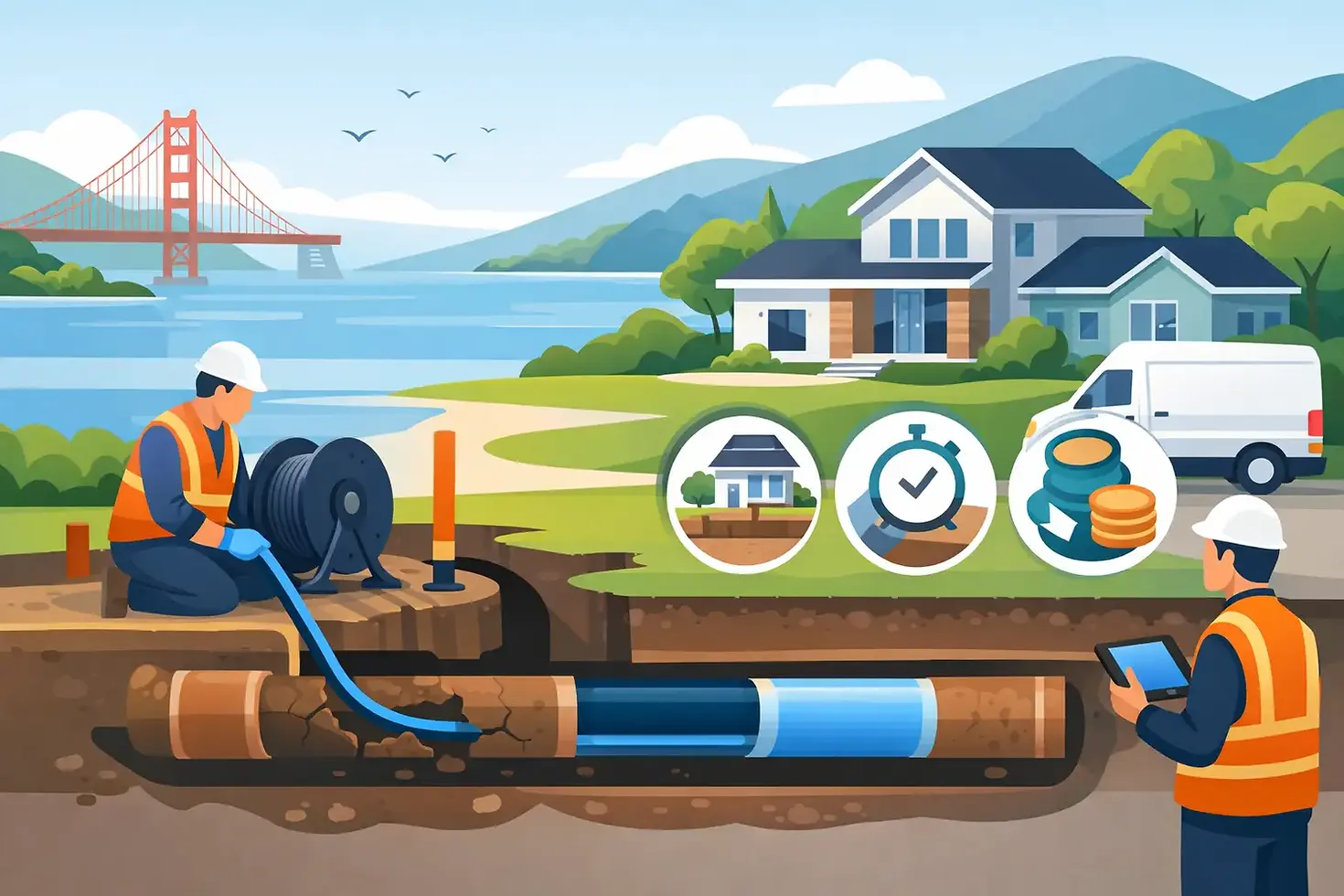
Trenchless sewer repair uses small access points instead. After locating the problem with a sewer camera inspection, a licensed plumber may recommend pipe lining or pipe bursting, depending on the condition and layout of the existing sewer line.
With pipe lining, a resin-saturated liner is installed inside an existing pipe and cured to form a durable new pipe within the old one. Pipe bursting involves pulling a new pipe through the ground while breaking apart the failed pipe. Both approaches can reduce the amount of digging needed, but the right method depends on the pipe material, damage, slope, access, and local conditions.
Key Trenchless Sewer Repair Benefits
The biggest advantage is reduced excavation. Instead of opening a long trench from the building to the sewer connection, technicians can often work from one or two strategic access locations. That helps protect the parts of a property that take time and money to restore.
Less Damage to Landscaping and Hardscapes
A conventional sewer project can disturb gardens, mature trees, fencing, patios, walkways, and driveways. Restoring those surfaces may add significant cost beyond the plumbing repair itself.
Trenchless service can preserve more of the property because it does not require exposing the full length of pipe. This is especially helpful for homes with established landscaping and commercial properties with paved customer areas, courtyards, or limited exterior workspace.
There may still be some digging. Access pits are sometimes necessary, particularly for pipe bursting or when the connection point needs repair. The difference is that excavation is generally targeted rather than extensive.
Faster Return to Normal Use
Sewer work is disruptive by nature, but a trenchless approach can shorten the construction portion of the job. Less excavation means less time spent removing and replacing soil, concrete, or landscaping materials.
For homeowners, this can mean fewer days of restricted access around the property. For restaurants, offices, apartment buildings, and other commercial facilities, a quicker repair can reduce the impact on tenants, employees, customers, and daily operations. The actual timeline still depends on permit requirements, pipe length, soil conditions, and the severity of the damage.
Fewer Restoration Costs
The plumbing repair is only one part of a traditional excavation project. Once a trench is filled, the property may need new sod, plants, irrigation repairs, concrete work, asphalt patching, or hardscape replacement.
One of the most practical trenchless sewer repair benefits is the potential to avoid much of that restoration work. Trenchless repair is not automatically less expensive in every situation. Specialized equipment and materials can make the plumbing portion comparable to, or sometimes higher than, a conventional repair. But when the cost of replacing a driveway, patio, or mature landscape is considered, the overall project may be more cost-effective.
A Strong, Long-Lasting Pipe Solution
When pipe lining is appropriate, the cured liner creates a continuous interior surface designed to resist corrosion, root intrusion, and small leaks. It can address cracks, offset joints, and deteriorating sections without removing the original pipe from the ground.
Pipe bursting replaces a failed line with a new pipe, which can be a strong option for severely damaged, collapsed, or undersized sewer lines. In some cases, it may also allow for a larger replacement pipe, improving flow capacity for a property that has experienced frequent backups.
A camera inspection is essential before choosing either option. A line that is badly crushed, improperly sloped, or filled with major obstructions may require excavation in specific areas. A dependable plumber will explain what the camera shows and recommend the repair that addresses the actual condition of the line.
Reduced Disruption Around Occupied Properties
For property managers and business owners, maintaining access is often as important as the repair itself. Large excavation areas can block parking, pathways, loading areas, or entrances. They can also create noise, dust, and safety concerns for occupants.
Because trenchless methods generally require a smaller work area, they can be easier to coordinate around occupied homes, multi-unit properties, and operating businesses. Proper site preparation and safety measures are still required, but the work can be more contained than a full trench excavation.
When Trenchless Repair May Not Be the Best Choice
Trenchless technology offers real advantages, but it is not the best answer for every sewer problem. A trustworthy plumbing professional should not recommend lining or bursting simply because it is available.
Excavation may be necessary when a sewer line has extensive collapse, major bellies that hold wastewater, serious slope problems, or damage near a connection that needs to be rebuilt. Certain pipe layouts, tight access conditions, and utility conflicts can also affect whether trenchless work is practical.
Older Bay Area properties can present unique challenges. Sewer lines may run beneath additions, garages, concrete slabs, shared driveways, or landscaping installed long after the original pipe. Local codes and permit requirements can influence the scope of work as well. A detailed inspection and clear estimate give property owners the information needed to compare options confidently.
Signs You Should Schedule a Sewer Camera Inspection
The best time to investigate a sewer issue is before a full backup creates interior damage. Repeated drain problems are often treated as isolated clogs when the underlying cause is a damaged or root-intruded sewer line.
Schedule professional evaluation if multiple drains are slow at the same time, toilets gurgle, sewage backs up into tubs or floor drains, or drains repeatedly clog despite cleaning. Unexplained damp areas or unusually green patches in the yard can also signal a leaking sewer pipe. A camera inspection identifies the location and condition of the issue, helping determine whether trenchless repair is a realistic option.
Choosing the Right Sewer Repair Plan
A quality sewer repair plan begins with accurate diagnosis, not assumptions. The technician should inspect the line, locate the damaged area, assess the pipe material and condition, and explain whether repair, lining, bursting, or excavation makes the most sense.
Ask what the inspection found, what method is being proposed, where access points will be located, and whether permits are required. It is also reasonable to ask how the property will be protected during the work and what restoration, if any, is included in the scope. Clear answers help avoid surprises and ensure the repair supports long-term performance.
When sewer trouble affects your home or business, prompt action can prevent a manageable pipe issue from becoming a disruptive backup. Superb Rooter & Plumbing can assess the line, explain the available repair options, and help you choose a practical solution that protects your property and restores dependable service.


Comments