Why Does My Sink Drain Slowly? Common Causes

A sink that takes an extra minute to empty can turn a simple handwashing or dishwashing task into a daily frustration. If you are asking, “why does my sink drain slowly,” the answer is usually a developing blockage somewhere between the drain opening and the main drain line. Acting early can often prevent a complete clog, overflow, or interruption to your home or business.
Why Does My Sink Drain Slowly?
Slow drainage happens when water can still pass through a pipe, but not at the rate it should. A small amount of buildup catches more debris over time, narrowing the path inside the drain. What begins as a minor inconvenience can become a fully blocked sink if the material is not removed.
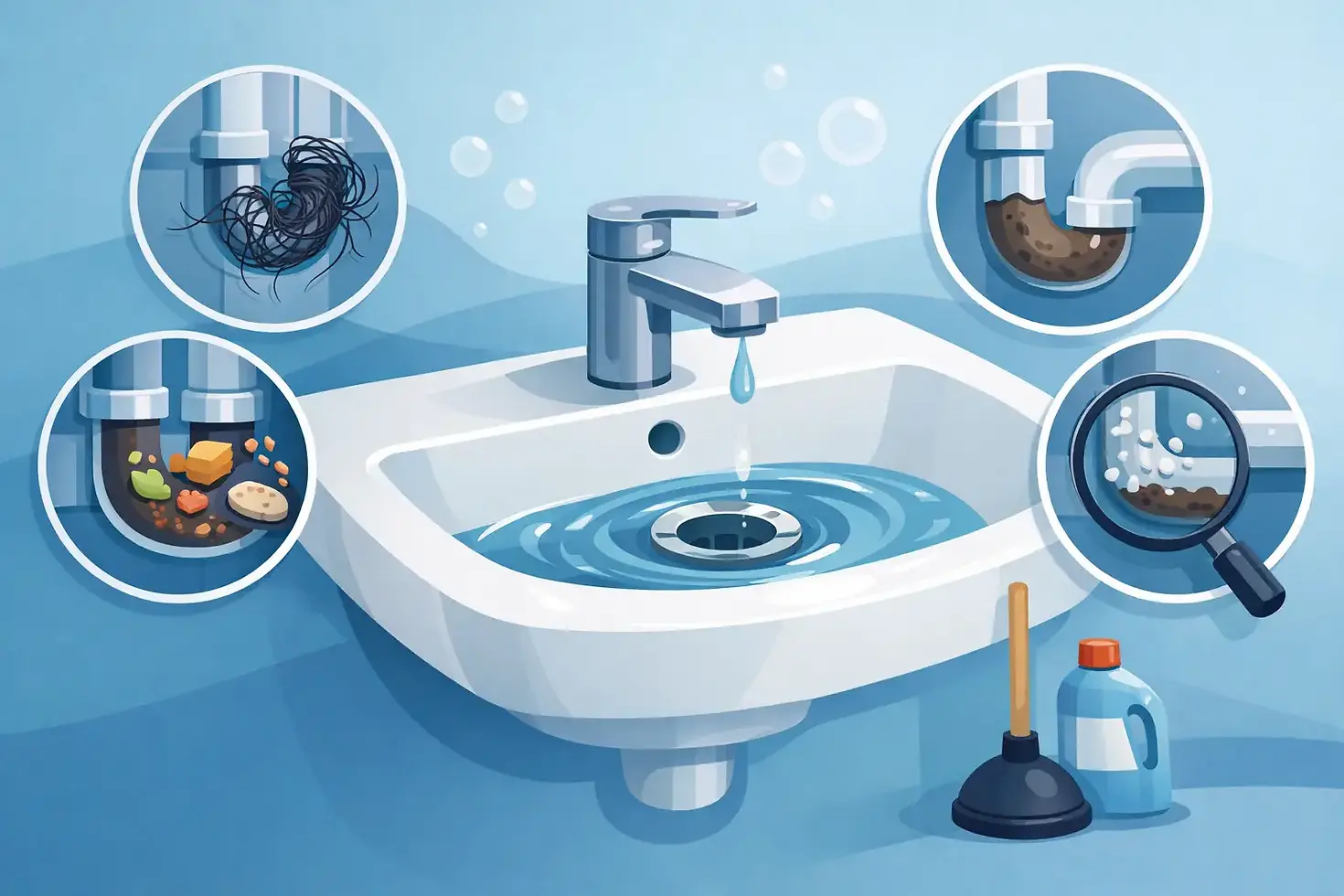
The location and type of sink matter. A bathroom sink commonly slows down because of hair, soap residue, toothpaste, and grooming products. Kitchen sinks are more likely to collect grease, food particles, coffee grounds, and detergent film. In a commercial setting, frequent use can cause buildup to form faster, particularly in break rooms, restrooms, salons, restaurants, and facilities with older plumbing.
A slow drain does not always mean the clog is directly below the sink. The issue may be in the P-trap, the branch drain inside a wall, or a larger shared line. The pattern of the problem offers useful clues.
Hair and soap buildup in bathroom sinks
Bathroom sink drains are narrow, and they are designed to catch hair before it moves deeper into the plumbing. Unfortunately, that hair combines with soap scum, toothpaste, skin oils, and mineral deposits to create a sticky blockage around the stopper or inside the drain trap.
If water pools around the stopper but eventually drains, start there. Many pop-up stoppers can be lifted out after disconnecting the linkage beneath the sink. Clean off visible hair and residue, then rinse the stopper before reinstalling it. Put on gloves and have a small container ready, because the buildup is often unpleasant but easy to remove.
Grease and food waste in kitchen sinks
Grease may look harmless when it is hot and liquid, but it cools and sticks to pipe walls. Once grease is present, it can trap food scraps and soap residue. Over weeks or months, the inside diameter of the pipe becomes smaller and water starts draining slowly.
Garbage disposals can contribute when they are used for foods that do not break down well, including fibrous vegetables, rice, pasta, eggshells, and coffee grounds. A disposal is helpful for small scraps, but it is not a replacement for scraping plates into the trash or compost bin. If your kitchen sink has a disposal, run cold water while it operates and continue running water briefly after it stops.
Mineral scale and aging pipes
Mineral deposits can build up inside fixtures and pipes, especially where water conditions encourage scale. Older galvanized steel pipes may also corrode internally. Unlike a simple hair clog, this type of restriction can be more persistent and may affect multiple fixtures over time.
In older Bay Area properties, pipe age is worth considering. A professional inspection can help determine whether the problem is ordinary buildup that needs cleaning or a pipe condition that requires repair or replacement. Repeated drain cleaning will not solve a line that has become severely corroded, damaged, or improperly pitched.
Check Whether the Problem Is Limited to One Sink
Before trying a fix, pay attention to which fixtures are affected. One slow bathroom sink generally points to a local blockage near that fixture. A kitchen sink that drains slowly on both sides may indicate a clog in the shared drain line or disposal connection.
If several sinks, tubs, showers, or toilets are draining slowly, the concern is more serious. Multiple slow fixtures can indicate a blockage farther down the plumbing system, including the sewer line. Property managers and business owners should treat this as a prompt service issue, since a backup can disrupt restrooms, kitchens, tenant spaces, and daily operations.
Also listen for gurgling. A gurgling sink, water rising in another fixture, or a toilet that bubbles when a sink drains can signal a drain or venting problem beyond the sink itself. Those symptoms are not a good match for repeated do-it-yourself treatments.
Safe Steps to Try Before Calling a Plumber
For a single, mildly slow sink with no backup or gurgling, a few basic steps may help. Start by removing the stopper or drain screen and clearing visible debris. Then flush the drain with hot tap water. Avoid pouring boiling water into porcelain fixtures or PVC piping, as extreme heat can cause damage.
A plunger can also be effective when used correctly. For a bathroom sink, block the overflow opening with a wet rag so the plunger can create pressure. Add enough water to cover the plunger cup, then use several firm, controlled strokes. For a double-bowl kitchen sink, seal the second drain opening before plunging the slow side.
If the clog appears to be in the P-trap, place a bucket underneath, remove the trap carefully, and clean it out. This is usually a manageable task for someone comfortable working under a sink. Stop and call a professional if fittings are corroded, pipes are fragile, leaks appear, or the blockage is beyond the trap.
Be cautious with chemical drain cleaners
Chemical drain cleaners are often marketed as a fast answer, but they come with trade-offs. Strong formulas can damage older pipes, harm certain finishes, and create a hazardous situation for anyone who later opens the drain or works on the line. They may also burn through a small channel in a clog without actually removing the buildup.
Do not mix drain-cleaning products with one another, vinegar, bleach, or any other household chemical. If a chemical cleaner has already been used and the drain remains slow, tell the plumber before service begins. That information helps protect everyone working on the system.
When a Slow Sink Needs Professional Drain Cleaning
A professional should inspect the drain when the problem returns quickly, affects more than one fixture, produces foul odors, or does not improve after simple cleaning. Recurring clogs are especially important because they usually mean debris remains farther down the line or there is an underlying pipe issue.
Professional drain cleaning removes buildup more thoroughly than a surface-level treatment. Depending on the condition of the line, a technician may use a cable machine, specialized cleaning equipment, or a camera inspection to identify the source of the restriction. The right method depends on the pipe material, the location of the clog, and whether there are signs of damage.
For commercial properties, prompt service can reduce the risk of a restroom closure, sanitation concern, or interruption to staff and customers. Homes benefit too: clearing a developing clog before it becomes a backup protects cabinets, flooring, and the surrounding areas from water damage.
Superb Rooter & Plumbing provides dependable drain and plumbing support for homeowners, property managers, and businesses throughout the San Francisco Bay Area, including urgent service when a drainage issue cannot wait.
Signs You Should Treat It as Urgent
A slowly draining sink is not always an emergency, but certain symptoms deserve immediate attention. Call for professional help promptly if you notice sewage odors, wastewater backing up into a sink or tub, water leaking beneath cabinets, repeated overflowing, or multiple fixtures draining poorly at the same time.
Do not continue running water in the affected area if it begins backing up. In a business, restrict access to the fixture when there is a sanitation or slip hazard. A quick response can prevent a localized drain problem from becoming property damage or a larger sewer backup.
Keep the Drain Moving After It Is Cleared
Good drain habits make a meaningful difference. Use sink strainers to catch hair and food scraps, wipe greasy pans before washing them, and keep coffee grounds and fibrous food waste out of the disposal. In bathrooms, cleaning the stopper every few weeks can stop hair from building into a difficult clog.
A slow sink is often the plumbing system’s early warning. Addressing it while the water still drains gives you more options, less mess, and a better chance of avoiding a disruptive backup later.


Comments